

The Earth's green heart: Emerald formation and mining
Journey with us into the depths of the Earth to uncover the astonishing origins of emeralds. From fiery magma to crystalline beauty, explore the geological marvels that create these exquisite gemstones.
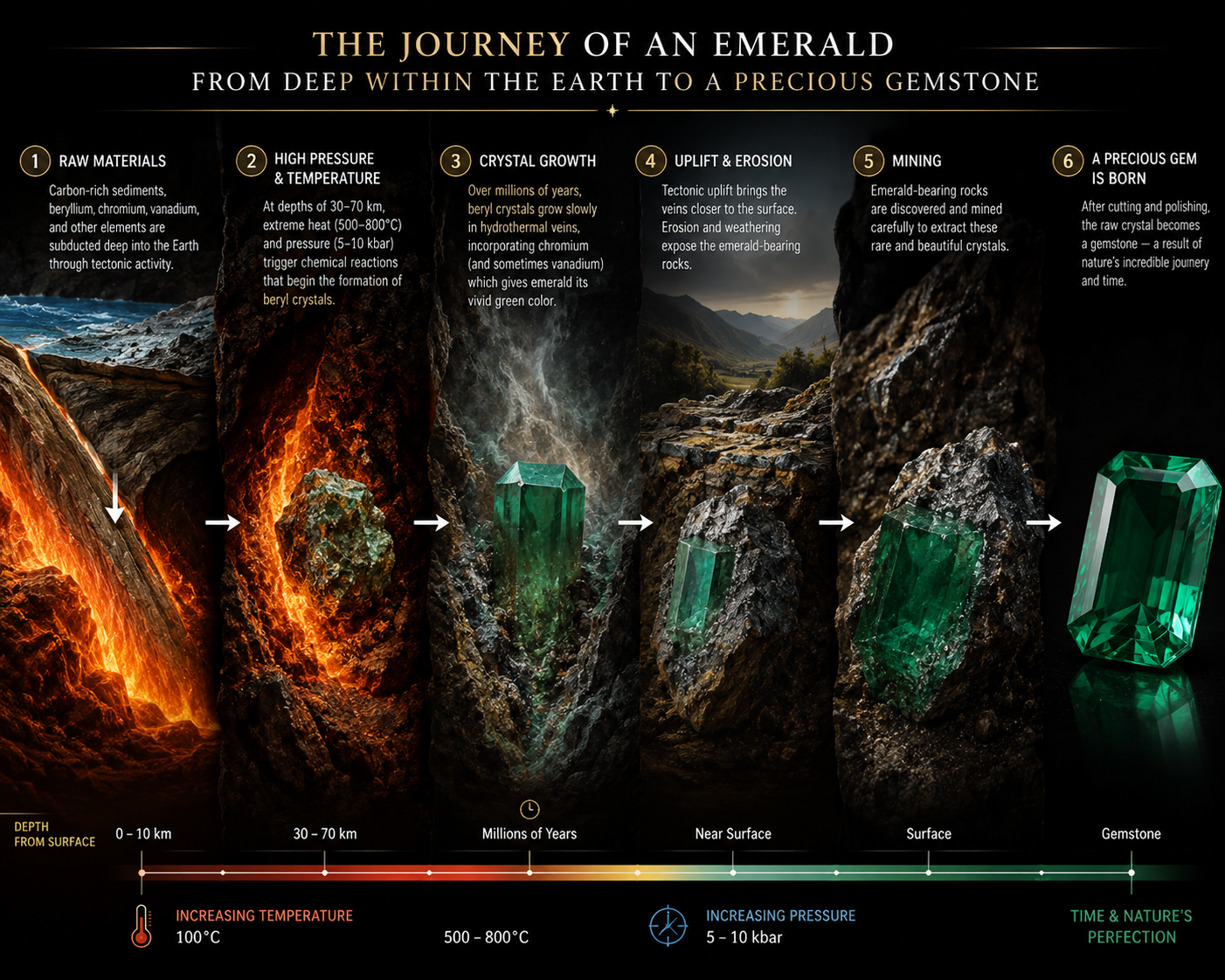
From magma to masterpiece: The emerald's journey
Deep beneath the Earth's crust, emeralds are forged in a delicate, high-pressure geological dance. Magma releases hydrothermal fluids rich in beryllium, which mingle with chromium and vanadium in surrounding rocks. As these fluids cool in deep fractures, spectacular green crystals slowly grow. This intricate process results in the stunning gemstones we cherish today, a true testament to the power and artistry of nature.
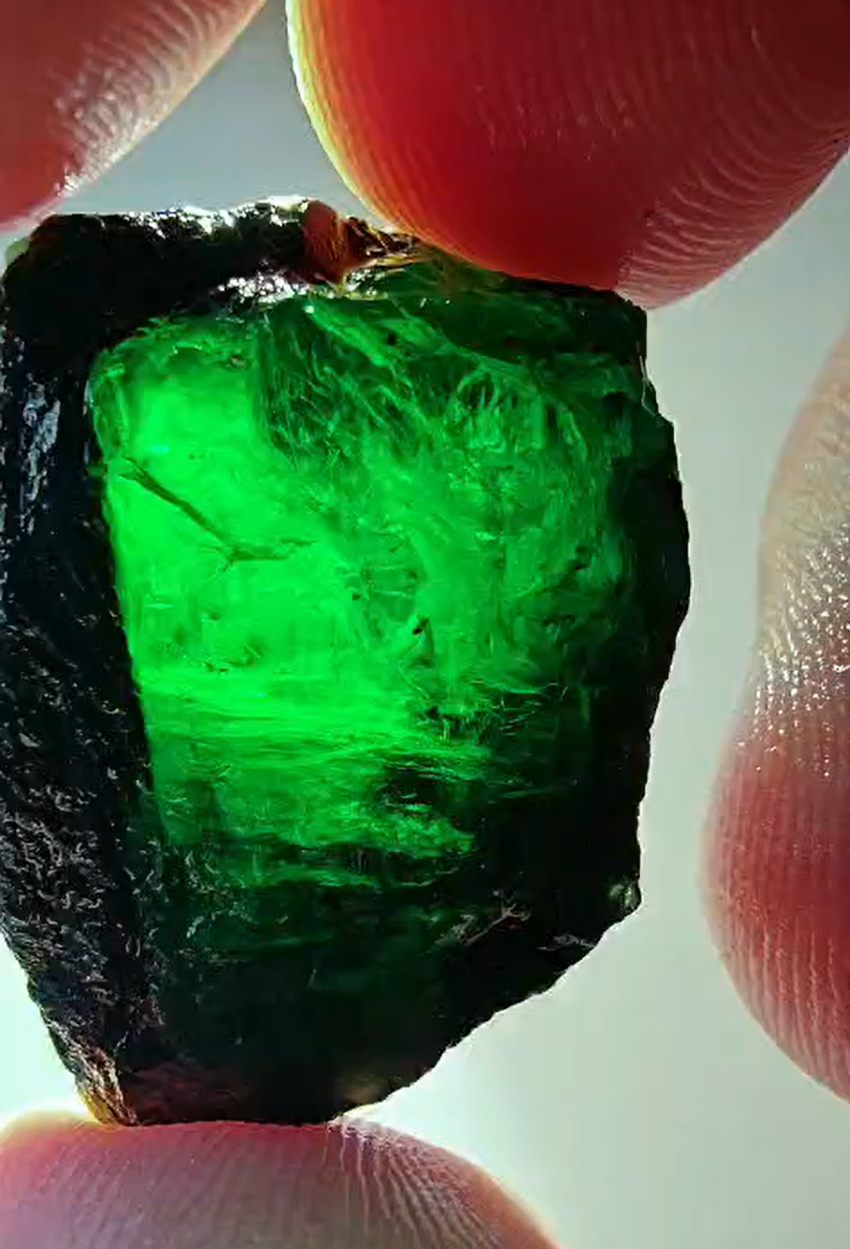
A rare treasure: The geological improbability of emeralds
Emeralds are rarer and more expensive than many other stones, including high-quality diamonds, because they require highly improbable geological conditions to form. Their unique beauty stems from how the Earth creates them, resulting in an array of fascinating characteristics. This scarcity makes each AURELLION emerald not just a gemstone, but a true natural wonder and a valuable investment.

The "gardens" within: A glimpse into geological time
Imagine super-hot, pressurized hydrothermal fluids (up to \(600^{\circ}\text{C}\)) violently shooting through fault lines in the Earth's crust. As the fluid rapidly cools, pristine green crystals begin to "grow" in the fractures like frost on a winter window. Unlike perfectly clean diamonds, natural emeralds contain microscopic "jardin" (the French word for garden). These "gardens" contain three-phase inclusions: a liquid, a bubble of gas, and a tiny salt crystal. You are literally looking at a microscopic drop of prehistoric seawater sealed away when dinosaurs still roamed the Earth. Each emerald tells a story millions of years in the making, connecting you directly to Earth's ancient past.